

Wolverine Blend Peptides for Researchers: Sourcing and Safety
The Wolverine Blend is a research-only peptide combination, typically BPC-157 plus TB-500, used as an investigational tool for probing coordinated tissue-repair pathways in preclinical models. Neither component holds FDA approval for human or veterinary use in the United States. Before any procurement decision, verify the Certificate of Analysis (COA), third-party HPLC and mass-spectrometry data, endotoxin test results, and lot traceability. Pause purchasing until all four documents are in hand.
Key documentation to confirm before ordering:
- COA with sequence identity and per-component purity (>98%)
- Independent HPLC and mass-spectrometry verification
- Endotoxin report (LAL method, EU/mL limit specified)
- Material Safety Data Sheet (MSDS) and research-only use statement
- Batch lot number and stability data
Table of Contents
- What do wolverine blend peptides actually contain?
- What are the U.S. regulatory and safety constraints?
- How do you vet a vendor before ordering?
- How should you design experiments with this blend?
- How do you store and reconstitute lyophilized vials?
- What does Neolabpeptides provide for researchers?
- Key Takeaways
- The documentation gap is the real research problem
- Neolabpeptides: research-grade supply with full documentation
- Useful sources
What do wolverine blend peptides actually contain?
The term “Wolverine Blend” is a marketing label, not a standardized pharmaceutical formulation. Vial compositions vary by vendor. The most common configuration is 10 mg BPC-157 plus 10 mg TB-500 in a single lyophilized vial (20 mg total), though some suppliers offer different ratios. Researchers should treat every lot as potentially distinct until the COA confirms actual per-component concentrations.
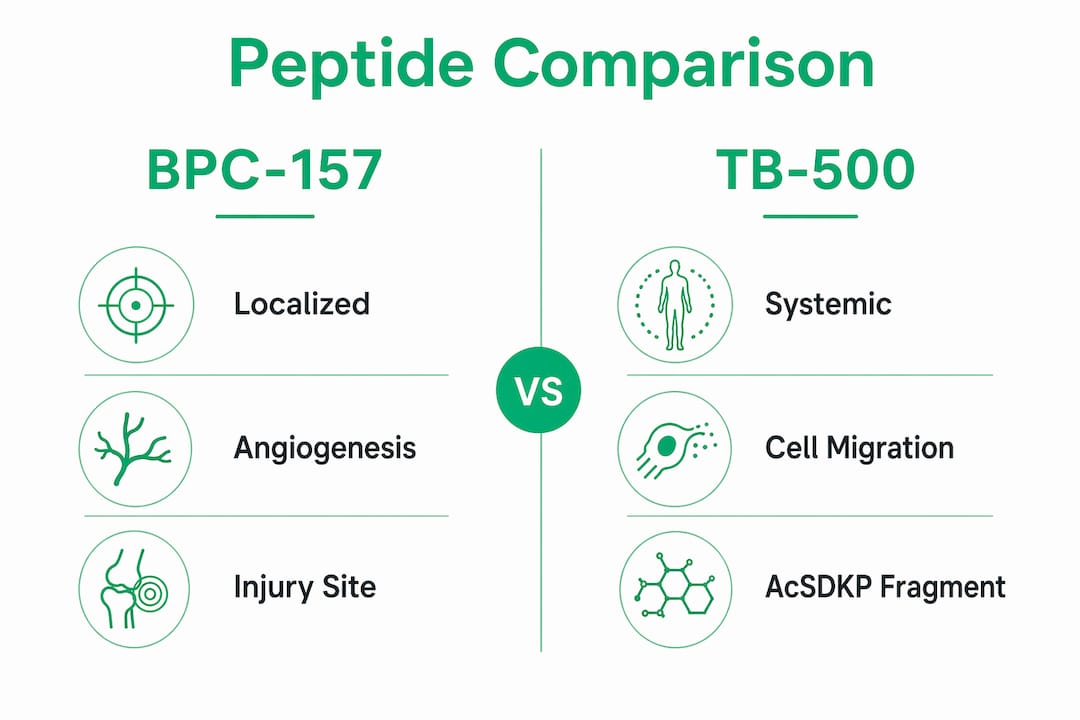
BPC-157 (Body Protection Compound 157) is a synthetic pentadecapeptide derived from human gastric juice proteins. Its confirmed amino acid sequence is Gly-Glu-Pro-Pro-Pro-Gly-Lys-Pro-Ala-Asp-Asp-Ala-Gly-Leu-Val. Mechanistically, BPC-157 modulates nitric oxide (NO) signaling, promotes VEGF-driven angiogenesis, and exerts cytoprotective effects at localized injury sites. It also shows oral stability in some preclinical models, making it relevant to both injectable and oral administration studies.
TB-500 is a synthetic analog of Thymosin Beta-4, specifically the AcSDKP sequence fragment. Its full sequence is Ser-Asp-Lys-Pro-Asp-Met-Ala-Glu-Ile-Glu-Lys-Phe-Asp-Lys-Ser-Lys-Leu-Lys-Lys-Thr-Glu-Thr-Gln-Glu-Lys-Asn-Pro-Leu-Pro-Ser-Lys-Glu-Thr-Ile-Glu-Gln-Glu-Lys-Gln-Ala-Gly-Glu-Ser. TB-500 regulates actin polymerization, promotes systemic cell migration to injury sites, and reduces fibrosis. Unlike BPC-157, it degrades orally and is administered subcutaneously or intramuscularly in preclinical protocols.
The mechanistic attraction of combining these two peptides lies in complementarity: BPC-157 addresses localized angiogenesis and cytoprotection while TB-500 drives systemic cell mobilization and actin remodeling. This is mechanistic plausibility supported by preclinical data, not clinical proof.
| Parameter | BPC-157 | TB-500 |
|---|---|---|
| Primary action area | Localized (injury site) | Systemic |
| Key pathway | NO signaling, VEGF, growth factors | Actin polymerization, cell migration |
| Oral stability | Reported in some models | Degrades orally; inject only |
| Common route (preclinical) | Subcutaneous, oral, intraperitoneal | Subcutaneous, intramuscular |
| Practitioner-reported dose* | 250–500 mcg daily | 2–5 mg weekly |
*Practitioner-reported ranges only. No standardized human-grade protocol exists.
Pro Tip: When reviewing a COA for a blended vial, request sequence-level identity confirmation for each component separately. A single purity percentage for the combined vial does not confirm that both peptides are present at the labeled concentration.
What are the U.S. regulatory and safety constraints?
U.S. regulatory bodies have flagged bulk peptide substances including BPC-157 and TB-500 analogs for safety concerns, citing limited safety data, potential immunogenicity, and peptide-related impurities. Both compounds are classified for research use only and carry no approved indication for human or veterinary administration.
Safety risks that labs must address before in vivo work:
- Endotoxin contamination: Lyophilized peptides produced without GMP controls can carry bacterial endotoxins that confound inflammatory readouts and pose direct biological hazards in animal models.
- Immunogenicity: Synthetic peptides with sequence modifications or impurities can trigger immune responses that invalidate experimental results.
- Potency inconsistency: Without third-party HPLC/MS verification, actual peptide content per vial may differ substantially from the label claim.
- WADA classification: BPC-157 and TB-500 are listed under WADA prohibited categories for substances without approved human therapeutic use. Labs working with athlete subjects or sports-medicine cohorts must account for this when designing protocols and obtaining IACUC/IRB approval.
Required documentation for U.S. research labs before any in vivo use:
- COA with HPLC and mass-spectrometry data, lot number, and purity specification (>98%)
- Endotoxin report specifying method (LAL) and EU/mL limit
- MSDS with hazard classification
- Vendor research-only use statement
- Stability data for the specific lot
How do you vet a vendor before ordering?
Procurement of research-grade peptide blends requires a structured review process. The following checklist applies to any supplier of Wolverine Blend components.
- Request the COA before payment. The document must list sequence identity for each component, per-component purity (>98% by HPLC), and a unique lot number.
- Confirm third-party testing. COAs signed only by the vendor’s internal lab carry less weight. Require a report from an independent analytical laboratory with HPLC chromatograms and mass-spec data attached.
- Obtain the endotoxin report. The LAL (Limulus Amebocyte Lysate) method is standard. Confirm the EU/mL limit is appropriate for your intended route of administration.
- Review the MSDS. Verify hazard classification, handling requirements, and disposal guidance align with your institution’s biosafety protocols.
- Check lot traceability. The lot number on the vial label must match the lot number on the COA. Discrepancies are a disqualifying red flag.
- Confirm U.S. shipping and research-only policy. The vendor must ship domestically and include a written statement that products are for research purposes only.
Red flags that should halt procurement:
- No COA available, or COA provided only after purchase
- Vague ingredient labeling (no sequence, no per-component breakdown)
- Missing endotoxin data
- Consumer-facing marketing language (e.g., “for athletes,” “rapid recovery”)
- Inconsistent lot numbers across documentation
For third-party testing workflows and what to look for in independent HPLC/MS reports, reviewing a structured guide before finalizing vendor selection is time well spent. Understanding how to read a COA field by field is equally critical before approving any lot for in vivo use.
How should you design experiments with this blend?
The evidence base for the Wolverine Blend rests almost entirely on animal and in vitro models. Positive preclinical signals are hypothesis-generating, not confirmatory. Experimental design must reflect that limitation.
| Design Element | Recommendation |
|---|---|
| Control arms | Vehicle control, BPC-157-only arm, TB-500-only arm, and combined arm |
| Dose groups | Minimum three dose levels per peptide arm for dose-response characterization |
| Blinding | Outcome assessors blinded to treatment assignment |
| Loading/maintenance | Loading phase (2–4 weeks), maintenance phase (2–4 weeks); adjust per model |
| Endpoints | Pre-specified at protocol registration; include negative outcomes |
| Sample size | Power calculation based on primary endpoint variance from pilot data |
No standardized human-grade dosing protocol exists for this blend. Published practitioner summaries report BPC-157 at 250–500 mcg daily and TB-500 at 2–5 mg weekly in loading phases, but these figures are extrapolated from animal studies and clinical observation, not regulatory guidance. Use them only as starting points for pilot pharmacodynamics work.
For IACUC/IRB submissions, describe both compounds as “investigational research-use-only synthetic peptides not approved for human or veterinary use,” specify the lot number and vendor COA purity, and include the endotoxin report as a supporting document.
Pro Tip: Preregister your experimental protocol, including dose selection rationale and primary endpoints, before beginning any in vivo work. This protects against outcome-reporting bias and strengthens the publishability of both positive and null results.
How do you store and reconstitute lyophilized vials?
Proper handling preserves peptide integrity and keeps experimental variability within acceptable bounds.
- Store lyophilized vials at -20°C, protected from light. Short-term storage (up to 4 weeks) at 4°C is acceptable for vials that will be used soon, but long-term stability requires freezing.
- Allow the vial to equilibrate to room temperature before opening to prevent condensation from entering the lyophilized cake.
- Select your reconstitution solvent. Bacteriostatic water (0.9% benzyl alcohol) is standard for multi-use vials. For single-use preparations or when benzyl alcohol may interfere with your assay, use sterile water for injection (SWFI). Some hydrophobic peptides require dilute acetic acid as a primary solvent before aqueous dilution.
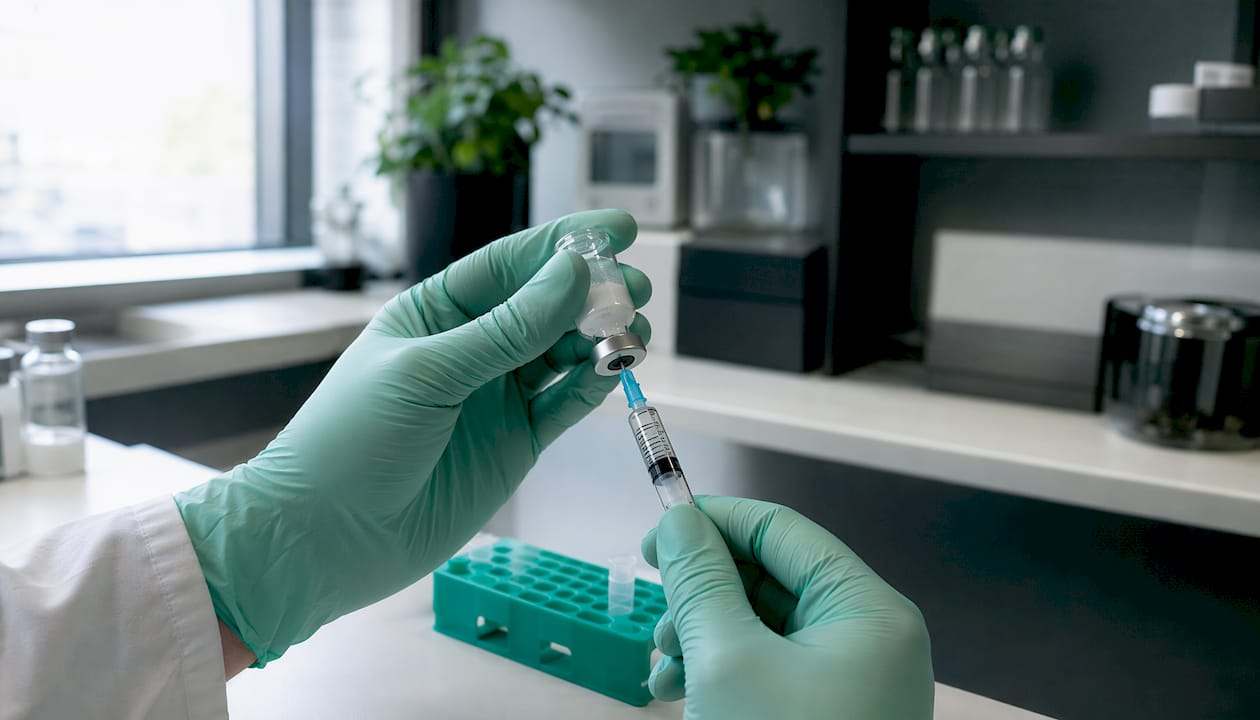
- Calculate target concentration. For a 10 mg vial reconstituted in 2 mL, the resulting concentration is 5 mg/mL (5,000 mcg/mL). Use a reconstitution calculator to confirm mcg/mL values before preparing dose aliquots.
- Inject solvent slowly down the vial wall. Do not inject directly onto the lyophilized cake. Swirl gently; do not vortex.
- Aliquot into single-use volumes and store at -20°C. Limit freeze-thaw cycles to no more than three per aliquot.
- Log all reconstitution events. Record lot number, reconstitution date and time, solvent used, final concentration, and aliquot count.
Endotoxin and sterility considerations apply to the solvent as well as the peptide. Confirm that bacteriostatic water or SWFI carries its own endotoxin specification before use.
Pro Tip: Label every aliquot with lot number, reconstitution date, concentration, and freeze-thaw cycle count. Incomplete records are the most common source of unexplained variability in peptide studies.
What does Neolabpeptides provide for researchers?
Neolabpeptides supplies research-grade BPC-157, TB-500, and related compounds as lyophilized vials verified to >98% purity by third-party HPLC and mass spectrometry. Every product ships with a COA that includes sequence identity, per-component purity, and lot number. Endotoxin reports and MSDS documents are available on request.
What to expect from a Neolabpeptides order:
- Lyophilized vials with labeled lot numbers matching the COA
- Third-party HPLC chromatograms and mass-spec data
- Purity specification >98% per component
- MSDS with hazard and handling classification
- Research-only use statement included with shipment
- U.S. domestic shipping with documented chain of custody
Before finalizing an order, contact Neolabpeptides technical support to confirm the current lot’s endotoxin report and request the full COA. If documentation for any field is incomplete, treat that as a procurement hold until resolved.
Key Takeaways
The Wolverine Blend requires verified COA, endotoxin data, and single-peptide controls before any preclinical experiment can generate interpretable results.
| Point | Details |
|---|---|
| Verify COA before purchase | Require sequence identity, >98% purity per component, HPLC/MS data, and a matching lot number. |
| Confirm endotoxin limits | Request a LAL-method endotoxin report with EU/mL limit before any in vivo administration. |
| Treat as investigational | Neither BPC-157 nor TB-500 is FDA-approved; describe both as research-use-only in IACUC/IRB submissions. |
| Include single-peptide controls | Run BPC-157-only and TB-500-only arms alongside the combined group to isolate each compound’s contribution. |
| Neolabpeptides as supplier | Neolabpeptides provides >98% purity lyophilized vials with third-party HPLC/MS COAs and U.S. domestic shipping. |
The documentation gap is the real research problem
The Wolverine Blend occupies a genuinely interesting space in preclinical biology. The mechanistic rationale for combining BPC-157 and TB-500 is coherent: two peptides targeting distinct repair pathways, with complementary spatial distributions (local versus systemic), represent a reasonable hypothesis for coordinated tissue repair research. The preclinical signals are real enough to justify continued investigation.
What concerns me is not the biology. It is the documentation culture surrounding these compounds. Too many researchers treat a vendor’s purity claim as sufficient and skip the endotoxin report entirely. In inflammatory models especially, that omission can produce false positives that take years to unravel. The field’s credibility depends on researchers holding suppliers to the same evidentiary standard they apply to their own data.
The other underappreciated issue is outcome reporting. Positive preclinical results with these peptides circulate widely; null results rarely do. Preregistering protocols and committing to publish negative findings is not just an ethical obligation. It is the only way the field will eventually know whether the mechanistic synergy hypothesis holds under rigorous conditions.
Neolabpeptides: research-grade supply with full documentation
Researchers who need verified BPC-157 and TB-500 for preclinical work have a direct option. Neolabpeptides delivers lyophilized peptides at >98% purity, confirmed by independent HPLC and mass-spectrometry analysis, with COAs, endotoxin reports, and MSDS documents available before your order ships.

Every vial includes a lot number traceable to its COA, and the research-only use statement is included with each shipment. To request a batch COA, confirm endotoxin specifications, or ask technical questions about sequence identity and reconstitution, visit Neolabpeptides and contact the support team directly. Documentation requests are handled before purchase, not after.
Useful sources
- Local and Systemic Peptide Therapies for Soft Tissue Regeneration: A Narrative Review (PMC) — Peer-reviewed narrative review covering BPC-157 and Thymosin Beta-4 mechanisms, routes of administration, and preclinical evidence; suitable for IACUC/IRB protocol citations.
- Wolverine Peptide Stack: BPC-157, TB-500, Safety, and Claims (GetPepd) — Covers regulatory cautions, COA requirements, and procurement red flags for the combined blend.
- Wolverine Stack Dosing Guide, Evidence and Clinical Review (Online Peptide Doctor) — Aggregates practitioner-reported dose ranges and summarizes the evidence gap for human protocols.
- BPC-157 + TB-500 Wolverine Stack: Evidence Review (HL Benefits) — Reviews preclinical evidence, WADA classification, and experimental design considerations.
- Wolverine Peptide Stack Complete Guide (BrainFlow) — Summarizes mechanistic roles, administration formats, and the framing of the blend as a research tool rather than a therapeutic product.