

Peptide Storage Conditions: Lab-Ready Rules and Timelines
Lyophilized peptide powder belongs in a freezer at -20°C to -80°C, sealed, dry, and shielded from light. Reconstituted peptide solution belongs in the refrigerator at 2–8°C, and if it’s mixed with bacteriostatic water, you have roughly a 28-day window before you discard it. The single habit that preserves the most stability across both states is simple: keep the peptide sealed, dry, dark, and at the correct temperature, and never refreeze a reconstituted vial once it has been drawn from.
Act on this immediately after receiving a shipment:
- Move lyophilized vials to cold storage the moment you confirm the Certificate of Analysis matches the shipment.
- Label the vial with the reconstitution date and diluent type the second you add liquid.
- Aliquot any working stock you plan to freeze rather than freezing and thawing one shared vial repeatedly.
Quick reference: lyophilized peptides stored correctly can remain stable for 12 to 36 months at -20°C, and 3 to 5+ years at -80°C, while bacteriostatic water reconstitutions typically hold for 21 to 30 days refrigerated before the diluent itself becomes the limiting factor, not the peptide.
Key Takeaways
Peptide stability depends on matching physical state to temperature: lyophilized powder needs a freezer, reconstituted solution needs refrigeration and a hard discard date.
| Point | Details |
|---|---|
| Match state to temperature | Store lyophilized powder at -20°C to -80°C; refrigerate reconstituted solution at 2–8°C. |
| Respect the diluent clock | Bacteriostatic water gives about 28 days refrigerated; sterile water gives only 24 to 48 hours. |
| Aliquot before freezing | Split working stock into single-use cryovials to avoid repeated freeze-thaw damage. |
| Flag oxidation-prone sequences | Peptides with cysteine, methionine, or tryptophan need inert-gas purging and light protection. |
| Verify, don’t assume | Re-run HPLC or mass spec on long-held inventory, especially past 12 months of storage. |
Table of Contents
- How should you store lyophilized peptides?
- What’s the right way to store reconstituted peptides?
- How should you reconstitute and aliquot peptides?
- Which peptide sequences need extra protection?
- What equipment and checklist does a lab need?
- How does Neo Lab Peptides support these storage practices?
- Where can you learn more about peptide storage?
- What actually matters most in peptide storage
- Sources
How should you store lyophilized peptides?
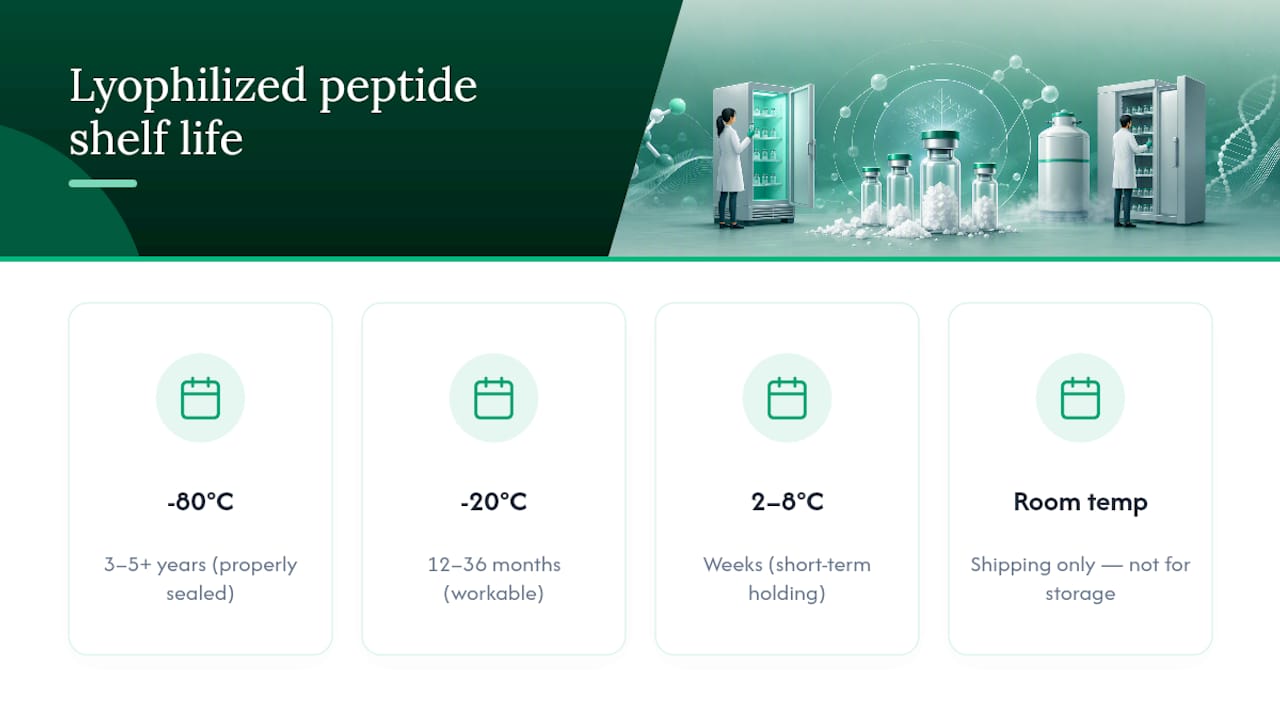
Temperature tier dictates realistic shelf life more than any other single variable. At -80°C, a properly sealed lyophilized peptide can remain chemically sound for 3 to 5 years or longer. Drop to -20°C, and you’re looking at a more modest but still workable 12 to 36 months. Refrigeration at 2–8°C is acceptable for short-term holding, generally weeks rather than months, and room temperature should be treated as a shipping condition, not a storage plan.
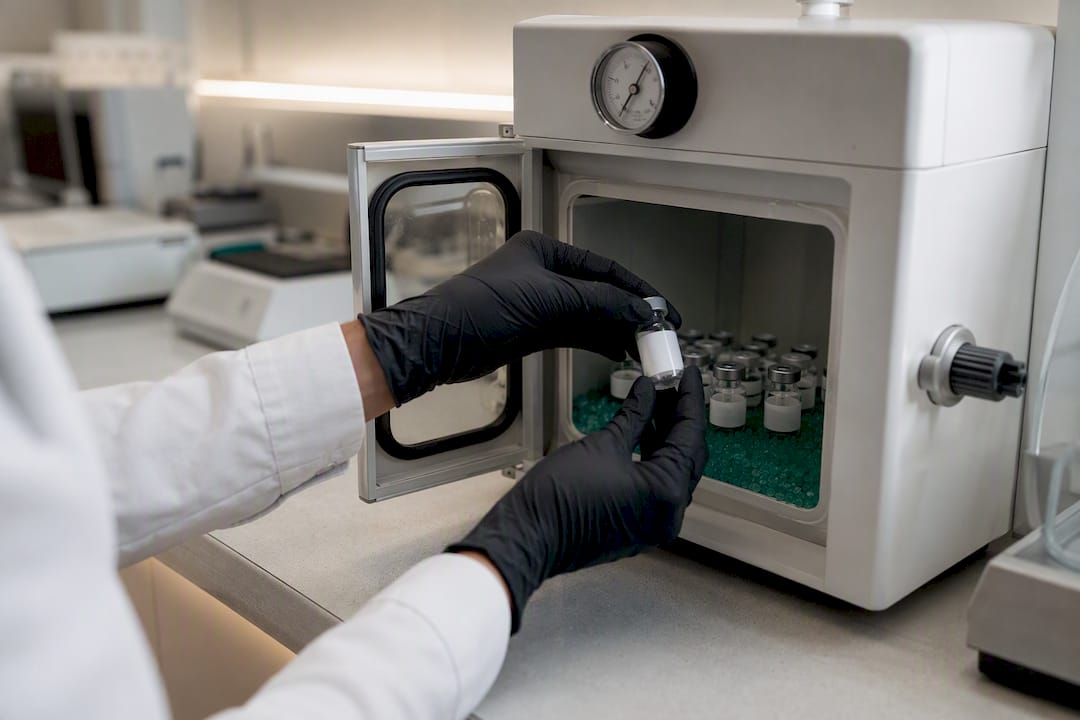
Moisture is the quiet threat most labs underestimate. Lyophilized peptides are hygroscopic, meaning they pull water from the air, and that absorbed moisture accelerates hydrolysis long before you ever reconstitute anything. Keep vials in a desiccator cabinet with fresh desiccant packets, and don’t crack a vial open in humid ambient air if you can avoid it.
Light exposure degrades sensitive peptide bonds over time, so amber vials and foil-wrapped storage boxes aren’t cosmetic. They’re functional. On the receiving end, short periods of room-temperature transit are generally tolerable if the shipment was packaged correctly, but the moment a shipment arrives, it should go into cold storage.
Pro Tip: Let a lyophilized vial sit sealed inside a desiccator for 15 to 20 minutes after removing it from the freezer, before opening it. This prevents condensation from forming on the cold glass and introducing moisture into the powder.
For a deeper walkthrough of vial-specific handling, our lyophilized peptide storage guide covers packaging materials and lab setup in more detail.
What’s the right way to store reconstituted peptides?
Reconstitution starts a clock that lyophilized storage doesn’t have. The solvent you choose sets that clock’s length.
- Bacteriostatic water (containing 0.9% benzyl alcohol as a preservative) allows a reconstituted peptide to remain usable for about 21 to 30 days when refrigerated at 2–8°C.
- Sterile water without preservative shortens that window dramatically, down to roughly 24 to 48 hours, because there’s nothing controlling microbial growth once the seal is broken.
- Never refreeze the original reconstituted vial. Repeated freeze-thaw cycles on a shared vial degrade the peptide with every cycle and increase contamination risk each time you puncture the septum.
The often-repeated “30-day rule” isn’t really about peptide chemistry at all. It’s a diluent sterility limit. USP labeling guidance dictates that bacteriostatic water be discarded 28 days after first puncture, regardless of what peptide it’s mixed with. Confusing that rule with an inherent peptide stability limit leads to premature discards or, worse, false confidence in a solution well past its diluent’s sterility window.
Fridge placement matters more than most researchers assume. The back of the middle shelf holds the most stable temperature; the door swings widest and shortens usable life fastest. Label every vial with the reconstitution date, diluent used, and initials the moment you mix it.
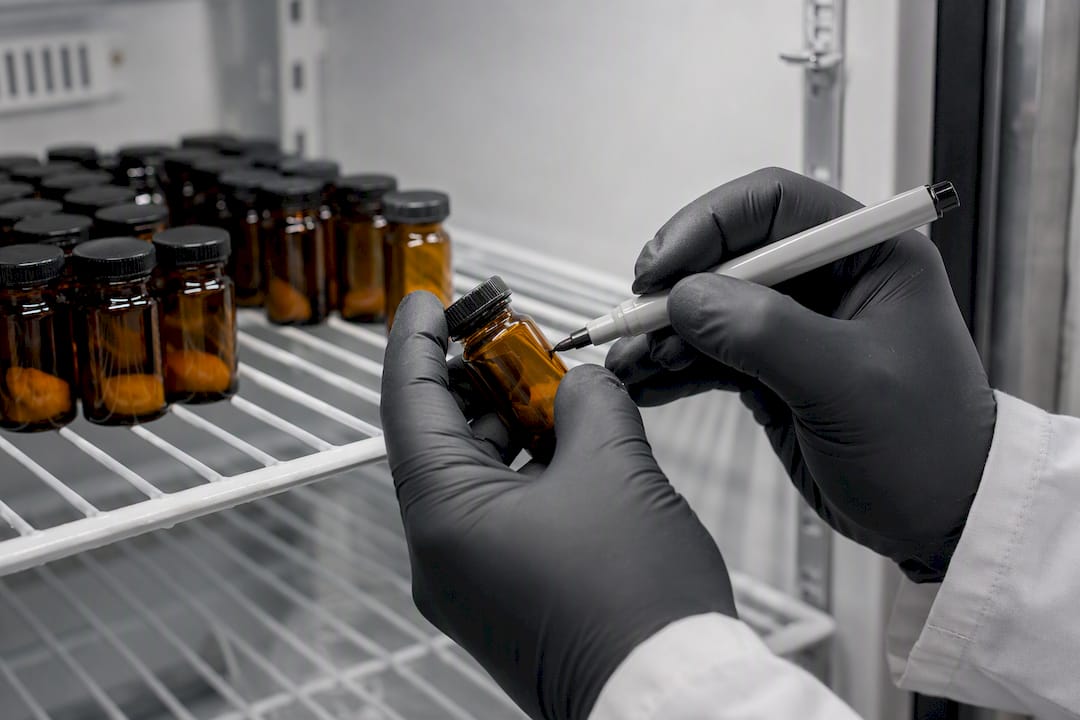
Temperature acceleration follows a predictable pattern here: warmer storage speeds up degradation reactions, so a vial left at room temperature for even a few hours loses potency faster than one sitting at a stable 4°C.
Pro Tip: If your assay requires sterile water instead of bacteriostatic water, treat that vial as a same-day or next-day use item. Don’t apply the 28-day mental shortcut to a preservative-free solution.
How should you reconstitute and aliquot peptides?
A clean protocol prevents both contamination and the slow potency bleed that comes from careless handling. Follow this sequence:
- Remove the lyophilized vial from the freezer and let it equilibrate to room temperature, sealed, for 15 to 20 minutes.
- Wipe the stopper with an alcohol swab before puncturing.
- Add diluent slowly, directing the stream against the vial wall rather than onto the powder, to avoid excess foaming.
- Swirl gently. Don’t shake. Vigorous agitation can denature the peptide structure.
- Once fully dissolved, aliquot into single-use cryovials immediately if you plan to freeze any portion.
- Label each aliquot with peptide name, concentration, diluent, and date.
For inventory notes, add reconstitution date and expected discard date directly into your lab SOP tracking sheet, not just the vial label.
Freeze-thaw cycling is one of the most damaging things you can do to a reconstituted peptide. Aliquoting into single-use portions right after reconstitution, then freezing those aliquots rather than the working vial, is the single most effective step for preserving potency. Avoid frost-free freezers for these aliquots; their automatic defrost cycles introduce temperature swings that mimic repeated freeze-thaw damage even when you never touch the vial.
Pro Tip: When an assay calls for sterile, preservative-free water, reconstitute only the volume you’ll use that day. This sidesteps the need for bacteriostatic preservative entirely and removes the 24 to 48 hour countdown from your workflow.
Our guide to handling peptide vials walks through equilibration and labeling conventions in more depth.
Which peptide sequences need extra protection?
Not every peptide degrades at the same rate, and sequence composition is the reason why. Peptides containing cysteine, methionine, or tryptophan are particularly prone to oxidation, while sequences with asparagine or glutamine near the N-terminus, or Asp-Pro motifs, are more susceptible to hydrolytic cleavage over time.
Flag these vulnerabilities during intake so your storage protocol matches the risk:
- Cysteine, methionine, tryptophan residues: purge headspace with inert gas (nitrogen or argon) before sealing, and store away from light.
- Hygroscopic peptides: pair with fresh desiccant and check the seal integrity on every vial before shelving.
- Peptides prone to aggregation: control pH during any reconstitution step and avoid excessive agitation.
Schedule HPLC and mass spectrometry re-verification for long-held inventory peptides, particularly anything stored longer than 12 months at -20°C or showing any visible change. A quarterly spot-check on high-turnover peptides catches degradation before it affects an entire experimental series.
What equipment and checklist does a lab need?
A functional peptide storage setup doesn’t require exotic equipment, but it does require the right pieces used consistently.
Equipment:
- Standard laboratory refrigerator (2–8°C) with door alarm
- -20°C freezer for mid-term lyophilized storage
- -80°C ultra-low freezer for long-term archival stock, where budget allows
- Desiccator cabinet with humidity indicator
- Digital min/max thermometer or continuous temperature logger
Consumables: desiccant packets, amber glass vials, sterile single-use cryovials, permanent lab markers, and parafilm for extra seal integrity on frequently accessed stock.
Receiving checklist: inspect the shipment for temperature excursions, confirm the Certificate of Analysis matches the lot number, move powder to cold storage immediately, label with arrival date, and log the batch in your inventory system before the vial ever leaves the bench.
Pro Tip: Keep a simple logbook next to the freezer, not just a digital record. When someone pulls a vial at 6 p.m. on a Friday, a paper entry catches what a rushed digital update misses.
Our cold chain shipping guide covers what to expect from insulated packaging before the vial even reaches your bench.
How does Neo Lab Peptides support these storage practices?
Every peptide Neolabpeptides ships carries a Certificate of Analysis backed by third-party HPLC and mass spectrometry verification, confirming purity at 98% or higher before it ever reaches your freezer. That documentation gives you a verified starting purity to compare against when you re-test stored inventory months later.
Supporting resources for lab teams include:
- Detailed lyophilization process documentation explaining how residual moisture is controlled before the powder ships.
- Purity testing and Certificate of Analysis reference for verifying what arrived matches what was ordered.
- Cold chain shipping documentation so your receiving team knows what temperature exposure to expect in transit.
These resources exist so your lab can verify claims independently rather than taking a supplier’s word alone.
Where can you learn more about peptide storage?
For deeper technical detail beyond this guide, consult Bachem’s handling and storage guidelines for residue-level oxidation risks, and Peptide Portal’s storage guide for extended temperature-tier data.
What actually matters most in peptide storage
Most storage advice online treats every peptide the same way, as if a single freezer setting solves the problem. It doesn’t. The research points to something more specific: the container matters less than the state the peptide is in, and the biggest failure point isn’t the freezer at all. It’s the gap between reconstitution and use.
The “30-day rule” gets treated like gospel, but it’s really a bacteriostatic water labeling requirement that got mistaken for peptide chemistry. That confusion causes two opposite mistakes: labs discarding perfectly viable peptide too early, and labs assuming a sterile-water reconstitution has the same runway when it doesn’t.
If you take one thing from this guide, make it aliquoting. Splitting a working stock into single-use portions before you ever touch it a second time does more for long-term potency than any freezer upgrade. A -80°C unit is nice to have. A disciplined aliquoting habit is what actually keeps your data clean six months from now.
— Stephan
Sources
- Peptide Storage Guide: Temperatures, Timelines & Best Practices | Peptide Portal
- How to Store Peptides: Shelf Life, Fridge vs. Freezer & the 30-Day Myth (2026)
- Handling and storage guidelines for peptides | Bachem knowledge center
- How Long Do Peptides Last? Shelf Life, Expiration, and Potency Guide | Done Dose