

BPC-157 Research: What the Evidence Actually Supports
Preclinical studies show robust regenerative effects of BPC-157 across tendon, muscle, ligament, bone, and gastrointestinal tissue, but human evidence remains extremely limited. For any researcher weighing this peptide for a study protocol, the working verdict is straightforward: strong mechanistic and animal-model support, paired with a thin, early-stage human dataset that keeps BPC-157 firmly in investigational territory.
The mechanistic story centers on three pathways researchers cite repeatedly: VEGFR2-mediated angiogenesis, Akt-eNOS/nitric oxide signaling that governs tissue perfusion, and ERK1/2 activation tied to growth-factor and fibroblast activity. These pathways explain why BPC-157 shows up so often in tendon-healing and gut-protection models, and why researchers keep circling back to it for musculoskeletal and GI applications.
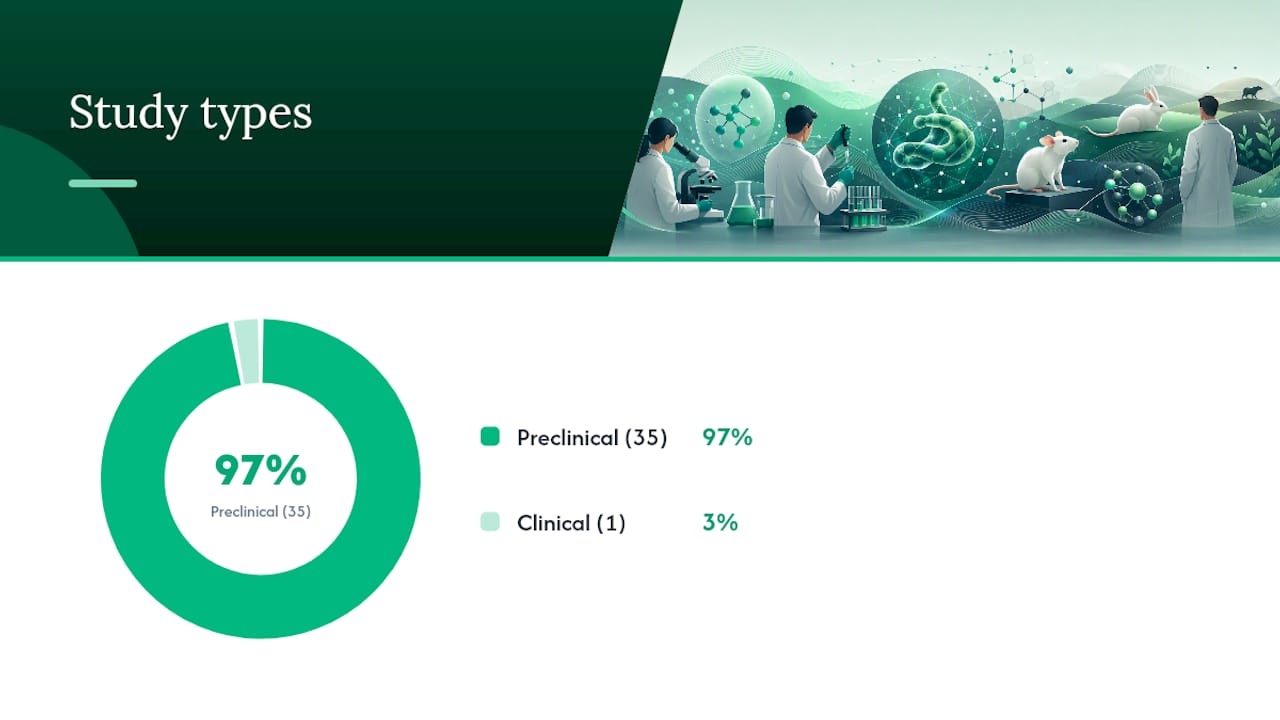
What separates BPC-157 from a lot of trending research peptides is the paper trail. A systematic review of 36 studies found consistent preclinical benefits on angiogenesis, inflammation, and biomechanical healing, but noted only one clinical study met inclusion criteria. That imbalance, 35 animal or in vitro studies against a single human trial, is the core tension every researcher in this space needs to hold onto.
- Preclinical signal: consistent, replicated effects on angiogenesis, inflammation, and structural repair across tendon, muscle, ligament, and bone models.
- Human signal: a handful of small pilot studies and one registered Phase I pharmacokinetic trial, NCT02637284, with no large randomized trial completed.
- Regulatory status: flagged by WADA and classified by the FDA as a Category 2 bulk drug, both of which restrict legitimate human use pathways.
Trust signals worth noting: a peer-reviewed systematic review and a separate narrative review both converge on the same mechanistic picture, a Phase I trial is actively registered on ClinicalTrials.gov, and reputable suppliers now pair lyophilized product with third-party Certificates of Analysis. Those three things, published review consensus, a registered trial, and verifiable purity documentation, are what separate legitimate BPC-157 research from the noise surrounding it.
Key Takeaways
BPC-157’s regenerative effects are well-documented in preclinical models but remain unconfirmed in controlled human trials, making rigorous sourcing and study design the top priorities for researchers right now.
| Point | Details |
|---|---|
| Mechanism is multi-pathway | VEGFR2 angiogenesis, Akt-eNOS/NO signaling, and ERK1/2 activation together drive the observed regenerative effects. |
| Preclinical evidence dominates | A 36-study systematic review found only one clinical study against 35 preclinical ones. |
| Human data stays pilot-stage | Three small human studies plus one registered Phase I trial (NCT02637284) make up the entire human dataset. |
| Half-life demands fast sampling | Elimination half-life runs under 30 minutes, so PK sampling windows must front-load the first hour. |
| Verify supplier documentation | Sourcing BPC-157 from Neolabpeptides gives researchers third-party HPLC/MS verification and a COA for every batch. |
Table of Contents
- BPC-157 Research on Mechanism of Action
- Preclinical Evidence Across Tissue Types
- Human Evidence and Registered Clinical Trials
- Pharmacokinetics, Metabolism, and Handling for Lab Use
- Safety Signals and Toxicology Gaps
- Regulatory Status and Ethical Considerations for Human Research
- Research Gaps and Priorities for Future Studies
- Sourcing Verified BPC-157 for Reproducible Research
- BPC-157 Compared to Other Regenerative Peptides
- Delivery Methods and Bioavailability Considerations
- Broader Signaling Pathways and Molecular Targets
- Drug and Peptide Interaction Considerations
- What Researchers Should Prioritize First
- Where to Source Research-Grade BPC-157
- Frequently Asked Questions About BPC-157 Research
- Sources
BPC-157 Research on Mechanism of Action
BPC-157’s regenerative reputation rests on a handful of overlapping signaling pathways, not a single mechanism. Understanding which pathway drives which effect matters when you’re designing a study and need to pick relevant biomarkers.
VEGFR2 and angiogenesis
The most frequently cited mechanism involves VEGFR2 activation, which triggers endothelial cell proliferation and new capillary formation at injury sites. In tendon and ligament models, this angiogenic push appears to accelerate the early inflammatory-to-proliferative transition that normally bottlenecks healing in poorly vascularized tissue. Tendons, in particular, heal slowly because they’re relatively avascular to begin with, so a pathway that recruits new blood supply has an obvious rationale even before you get to the outcome data.
Nitric oxide, Akt-eNOS, and perfusion
A second, related mechanism runs through the Akt-eNOS pathway, which increases nitric oxide (NO) bioavailability. NO is a vasodilator, and in BPC-157 models it appears to improve local blood flow and reduce ischemic damage in both gut and musculoskeletal tissue. This is the same pathway implicated in the peptide’s gastroprotective effects, where improved mucosal blood flow correlates with faster ulcer healing in animal models. The MDPI literature and patent review catalogs these NO-related and antioxidant effects across multiple organ systems, reinforcing that this isn’t a tissue-specific quirk but a recurring feature of the peptide’s biological profile.
ERK1/2 and fibroblast activity
The third major pathway, ERK1/2, sits downstream of several growth-factor receptors and appears linked to fibroblast proliferation and collagen synthesis. This is the piece of the mechanism most relevant to connective tissue researchers, since collagen deposition and cross-linking quality determine the mechanical strength of a healed tendon or ligament, not just whether it heals at all. Some preclinical work also points to a neuromuscular stabilization effect, though the evidence here is thinner and less consistently replicated than the angiogenesis and NO findings.
- VEGFR2 activation drives new vessel formation, particularly relevant in low-vascularity tissue like tendon.
- Akt-eNOS/NO signaling improves perfusion and appears central to both musculoskeletal and gastrointestinal effects.
- ERK1/2 pathway activity supports fibroblast proliferation and collagen synthesis in connective tissue repair.
- Neuromuscular effects are reported but less consistently replicated across independent labs.
Pro Tip: If you’re designing a mechanistic study, don’t treat VEGFR2, Akt-eNOS, and ERK1/2 as interchangeable proxies for “regeneration.” Each pathway has a distinct assay signature, microvessel density for VEGFR2, nitrite/nitrate assays for NO, phosphorylated ERK for the kinase pathway, and conflating them in your endpoints will muddy causal interpretation.
The scoping review in PMC that catalogs these pathways is candid about the limitations: most of this mechanistic mapping comes from rodent and in vitro models, species differences in receptor expression and metabolism aren’t fully characterized, and a pathway shown active in vitro doesn’t automatically confirm the same magnitude of effect in a living organism. Researchers should treat mechanism-of-action findings as hypothesis-generating rather than confirmatory until bridging studies close that gap.
Preclinical Evidence Across Tissue Types
The preclinical dataset behind BPC-157 is large relative to most experimental peptides, and it’s concentrated heavily in a few organ systems where the effect has been replicated across independent labs.
-
Tendon and ligament models. This is where BPC-157 has the deepest evidence base. Studies using transected or crush-injured tendon models in rats report improved collagen organization, increased tensile strength, and accelerated functional recovery compared to controls. Ligament models, particularly medial collateral ligament injury, show similar biomechanical improvements, with researchers attributing the effect to the angiogenic and fibroblast-related mechanisms described above.
-
Muscle injury and regeneration. In muscle laceration and crush models, BPC-157 administration correlates with faster fiber regeneration and reduced fibrotic scarring. Several studies also report improved muscle function recovery after denervation injury, which is notable because muscle atrophy following nerve damage is notoriously resistant to pharmacological intervention.
-
Bone healing. Fracture-healing models, including segmental bone defects, show accelerated callus formation and improved bone mineral density in treated animals. The angiogenic mechanism plausibly explains this, since bone repair depends heavily on new vascular ingrowth to support osteoblast activity at the fracture site.
-
Gastrointestinal protection. This is arguably BPC-157’s original research niche, and the signal here is the most consistent across the literature. Ulcer models, both gastric and duodenal, show accelerated mucosal healing, and colitis models report reduced inflammatory markers and improved histological scores. The NO-mediated perfusion mechanism has the strongest mechanistic tie to this outcome category.
-
CNS and cardiac signals. These are the least mature areas. Some rodent studies report neuroprotective effects following induced brain injury, and a smaller set of cardiac models suggest protective effects against ischemia-reperfusion injury. Replication across independent labs is sparser here than in the musculoskeletal and GI categories, so treat these findings as preliminary.
Doses and routes vary considerably across this literature, which complicates cross-study comparison. Most rodent studies use intraperitoneal or subcutaneous injection, with reported doses commonly in the microgram-per-kilogram range, though exact dosing protocols differ by injury model and study design. That variability, combined with the fact that positive results are more likely to get published than null ones, means the aggregate literature probably overstates the true effect size. The PMC systematic review that synthesized 36 studies is explicit about this: 35 of the 36 were preclinical, and the review authors flag species differences and dosing heterogeneity as major barriers to translating animal findings directly into human dosing protocols. If you want a deeper technical breakdown of specific injury models and endpoints, Neolabpeptides’ preclinical research overview walks through the animal literature in more granular detail.
The publication bias problem deserves its own callout. Nearly every published preclinical BPC-157 study reports a positive effect. That pattern alone should raise a flag for any researcher trained to think about file-drawer effects: negative or null results in peptide pharmacology, as in most fields, tend not to get submitted or accepted for publication at the same rate as positive ones. It doesn’t mean the preclinical signal is fabricated. It does mean the effect sizes reported in the aggregate literature are probably an overestimate of what a well-powered, pre-registered study would find.
Human Evidence and Registered Clinical Trials
Human data on BPC-157 is where the enthusiasm has to meet reality. The total published human evidence base consists of a handful of small studies, none of which meets the bar for confirmatory clinical evidence.
- Retrospective intraarticular knee study. A retrospective case series examined patients who received intraarticular BPC-157 injections for knee pain. Of a small group contacted for follow-up, most reported symptom improvement, but the study lacked a control group, blinding, or standardized outcome measures, which means placebo effect and recall bias can’t be ruled out.
- Interstitial cystitis pilot study. A 12-person pilot trial tested intravesicular BPC-157 for interstitial cystitis and reported high rates of symptom resolution among participants. Again, the sample size and lack of a placebo arm limit how much weight this finding can bear.
- Small IV safety and PK pilot. A two-person intravenous dosing study tested tolerability up to 20 mg, with subjects returning to baseline physiological markers within 24 hours. This is safety and pharmacokinetic reconnaissance, not efficacy data, but it’s one of the only direct human PK data points in the public literature.
- Registered Phase I trial (NCT02637284). This is the most methodologically rigorous human study on the books: a randomized, placebo-controlled pilot evaluating oral PCO-02 (BPC-157) with an estimated enrollment of 42 participants. Primary endpoints include safety along with standard PK parameters, Cmax, Tmax, AUC, and elimination half-life, which will give researchers the first controlled human PK dataset for an oral BPC-157 formulation once results post.
Three small pilot studies and one registered Phase I trial make up essentially the entire human evidence base for a peptide with 35-plus supportive animal studies. That ratio is the single most important fact for any researcher citing BPC-157’s “clinical potential.” The retrospective and pilot studies are useful for hypothesis generation and safety signal detection, but none of them were designed, powered, or controlled well enough to establish efficacy. Until the Phase I trial reports results and larger controlled studies follow, human-directed claims about BPC-157 should be qualified accordingly, and any protocol built on this compound needs to treat the current human dataset as preliminary at best.
Pharmacokinetics, Metabolism, and Handling for Lab Use
BPC-157’s pharmacokinetic profile is short and fast, which has direct implications for both study design and lab handling protocols.
Reported elimination half-life runs under 30 minutes, with hepatic metabolism as the primary clearance route. That rapid turnover means single-dose PK sampling windows need to be front-loaded, most of the relevant kinetic action happens in the first hour, and it also means sustained tissue-level exposure in preclinical models likely depends on repeated dosing rather than a single injection producing lasting drug levels. Despite that short systemic half-life, the compound or its metabolites remain detectable in urine for up to roughly four days, a gap that matters for anti-doping testing windows and for any researcher trying to correlate systemic exposure with observed tissue effects over multiple days.
Administration routes studied in the literature include intravenous, intramuscular, intraperitoneal, and intraarticular injection, along with early-stage oral formulations now in Phase I testing. Injectable routes dominate the preclinical literature because they allow precise dosing control, while the oral formulation work reflects an effort to move toward a delivery method more compatible with eventual clinical use, assuming the PK profile through first-pass metabolism holds up.
For lab handling, a few practical points matter:
- Reconstitution: BPC-157 typically ships lyophilized and gets reconstituted with bacteriostatic water immediately before use; concentration should be calculated precisely based on vial content and intended dosing volume.
- pH sensitivity: Reconstituted peptide solutions are generally most stable near neutral pH, and researchers should avoid introducing acidic or highly alkaline diluents that could accelerate degradation.
- Storage: Lyophilized peptide is stable at refrigerated or frozen temperatures for extended periods; once reconstituted, solutions should be refrigerated and used within the timeframe specified by the supplier’s documentation.
- Solubility: BPC-157 is generally water-soluble at research-relevant concentrations, which simplifies reconstitution compared to more hydrophobic peptides, but batch purity affects how cleanly it goes into solution.
Pro Tip: Because the peptide’s plasma half-life is so short, don’t assume a single bolus dose in an in vitro assay reflects sustained receptor engagement. If your assay window extends beyond an hour, factor in the likelihood that active peptide concentration has already dropped substantially, and design your sampling timeline accordingly. Detailed reconstitution charts for specific vial sizes are available through third-party reconstitution guides, though that kind of procedural resource is a handling reference, not peer-reviewed pharmacology, so cross-check any concentration math against your own protocol.
Safety Signals and Toxicology Gaps
The safety picture for BPC-157 looks favorable in animal models but stays thin once you get to humans, and that gap is the most important caveat for anyone designing a study protocol.
Across multiple preclinical toxicology studies, researchers have not identified a lethal dose even at doses well above typical experimental ranges, and histological examination of major organs in treated animals generally hasn’t shown structural damage attributable to the peptide. That’s a reassuring signal, but it’s not the same as a fully characterized toxicological profile. Chronic exposure studies, multi-generational reproductive toxicity data, and detailed off-target binding characterization are all thin or absent in the published literature, a gap the MDPI patent and literature review explicitly flags as a priority for future work.
Human tolerability data comes entirely from small pilot studies. The two-person IV safety pilot, the 12-person interstitial cystitis study, and the retrospective knee injection series all reported no major adverse events, but sample sizes in the single or low double digits can’t rule out rare or delayed adverse effects. There is currently no published long-term human safety dataset for BPC-157 at any dose or route.
Despite generally favorable preclinical safety signals across a wide dose range, the absence of chronic toxicity studies, off-target binding characterization, and any long-term human safety data means BPC-157’s risk profile in humans remains genuinely uncharacterized, not merely “under-studied.”
- No identified lethal dose across several animal toxicology studies at elevated dose ranges.
- No major adverse events reported in the small human pilot studies published to date.
- No published long-term human safety or chronic toxicity data exist for any route of administration.
- Manufacturing quality is a separate and significant risk: unregulated suppliers selling mislabeled, underdosed, or contaminated peptide introduce a variable that has nothing to do with the compound’s actual pharmacology and everything to do with sourcing discipline.
That last point deserves emphasis because it’s an avoidable confound. A researcher who observes an unexpected adverse event or a null result has to be able to rule out contaminated or misdosed material before drawing conclusions about the peptide itself. That’s precisely what a third-party Certificate of Analysis is for, and why HPLC and mass spectrometry verification should be standard documentation in any methods section referencing BPC-157.
Regulatory Status and Ethical Considerations for Human Research
BPC-157 occupies an unusual regulatory position: it is not an approved drug anywhere, but it is also not a simple research chemical without oversight attention.
The World Anti-Doping Agency listed BPC-157 among unapproved substances starting in 2022, which means any athlete-adjacent research population carries doping-test implications that need to be disclosed and managed as part of study ethics review. Given the roughly four-day urine detectability window noted earlier, this matters for any researcher working with competitive athletes as subjects, informed consent documentation should flag the doping-status risk explicitly.
On the pharmaceutical regulation side, the FDA issued a Category 2 bulk drug substance classification in September 2023, a designation that restricts compounding pharmacies from preparing BPC-157 for patient use. That action doesn’t touch legitimate laboratory research, but it does mean:
- Compounding pharmacies can no longer legally supply BPC-157 preparations for human administration outside a registered clinical trial.
- Any human-subject research involving BPC-157 needs institutional review board approval and should be conducted under an investigational framework, not as an off-label clinical service.
- Researchers should document sourcing, purity, and chain of custody meticulously, both for scientific reproducibility and because regulatory scrutiny of this compound class is increasing, not easing off.
- Study protocols involving athlete populations should explicitly address doping-classification disclosure as part of informed consent.
None of this prevents legitimate preclinical or IRB-approved investigational research. It does mean the regulatory guardrails around human use have tightened, and any protocol that treats BPC-157 as a therapeutic shortcut rather than a research compound under active investigation is working against, not with, the current framework.
Research Gaps and Priorities for Future Studies
The single biggest gap in the BPC-157 literature is the near-total absence of controlled human dose-finding data, and closing that gap should be the field’s top priority.
- PK/PD dose-finding trials. The Phase I trial at NCT02637284 is a solid start, but the field needs multiple dose-ranging studies across different administration routes, not just oral, to build a real dose-response curve in humans.
- Randomized controlled trials with standardized endpoints. Every human study to date has used different outcome measures and inclusion criteria, which makes cross-study comparison nearly impossible. Future trials should pre-register standardized functional and biomarker endpoints before enrollment begins.
- Mechanistic biomarker validation in humans. Angiogenesis markers like VEGFR2 expression and microvessel density, along with NO-pathway biomarkers, have been validated in animal models but rarely measured in human trial participants. Bridging that gap would let researchers confirm the proposed mechanism actually operates the same way in humans.
- Chronic toxicity and reproductive safety studies. These remain essentially unaddressed in the published literature and represent a clear prerequisite before any larger-scale human trials expand beyond pilot-stage safety monitoring.
Pro Tip: If you’re scoping a new BPC-157 study, build your biomarker panel around the same angiogenesis and NO-signaling markers used in the preclinical literature, microvessel density, VEGFR2 expression, nitrite/nitrate assays. That consistency is what will actually let future meta-analyses link mechanism to outcome across studies, rather than each trial inventing its own endpoint set from scratch.
Operationally, reproducibility depends on unglamorous but essential details: documented supplier COAs, consistent analytic methods (HPLC and mass spectrometry, specifically), and a real commitment to publishing null results alongside positive ones. Given how skewed the current published record is toward positive findings, that last point may matter more than any single new trial design.
Sourcing Verified BPC-157 for Reproducible Research
Reproducibility in peptide research starts before the first assay runs. It starts with knowing exactly what’s in the vial.
Neolabpeptides supplies BPC-157 at greater than 98% purity, verified through third-party HPLC and mass spectrometry testing, with a Certificate of Analysis accompanying every batch. That documentation matters for a specific scientific reason: if your study produces an unexpected result, whether that’s an unusually strong effect or an unexpected null, you need to be able to rule out material impurity as a confound before you draw any conclusion about the peptide’s biology.
A COA should let you verify identity (mass spec confirmation of molecular weight), purity percentage (HPLC chromatogram), and batch-specific testing dates, details covered in more depth in Neolabpeptides’ guide to reading a peptide COA. Any methods section citing BPC-157 should include supplier, batch number, and purity verification as standard practice, the same way you’d cite a specific antibody clone or cell line source.
- Require a third-party COA (HPLC and mass spectrometry) with every batch, not just a supplier’s internal test claim.
- Confirm the product ships in lyophilized form intended explicitly for research use, not for human or veterinary administration.
- Document batch number and purity percentage in your methods section for reproducibility.
- Verify the supplier explicitly states research-only intended use, which aligns with current regulatory constraints on this compound.
| Point | Details |
|---|---|
| Purity verification | Confirm greater than 98% purity via HPLC/MS before any experimental use. |
| COA documentation | Cite batch number and COA details in your methods section for reproducibility. |
| Research-only labeling | Only source product explicitly labeled and sold for laboratory research use. |
BPC-157 Compared to Other Regenerative Peptides
Researchers evaluating BPC-157 often weigh it against TB-500 (thymosin beta-4 fragment), the other peptide most associated with tissue repair research. The comparison matters for study design because the two peptides work through different primary mechanisms despite overlapping downstream effects.
BPC-157’s evidence base centers on VEGFR2-driven angiogenesis and NO-mediated perfusion, with the strongest replicated signal in tendon, ligament, and gastrointestinal healing models. TB-500’s mechanism runs primarily through actin regulation, affecting cell migration and reducing fibrosis by modulating actin polymerization at wound sites. In practice, some preclinical protocols combine both peptides on the theory that angiogenic support (BPC-157) and reduced scar-tissue formation (TB-500) address complementary phases of the healing cascade, though controlled comparative data on that combination is sparse.
Compared to growth-factor-based approaches like platelet-rich plasma (PRP) or recombinant VEGF administration, BPC-157 offers a more targeted, single-molecule mechanism that’s easier to standardize across experimental replicates. PRP formulations vary batch to batch based on the donor’s own platelet concentration, which introduces variability that a synthetic peptide with a documented COA doesn’t carry.
For researchers structuring a comparative arm, the practical takeaway is that BPC-157 and TB-500 address overlapping but mechanistically distinct pathways, and neither should be treated as a drop-in substitute for the other without accounting for that difference in your biomarker panel.
Delivery Methods and Bioavailability Considerations
BPC-157’s short systemic half-life makes delivery method a central variable in any study design, not just a logistical detail.
Injectable routes, subcutaneous, intramuscular, intraperitoneal, and intraarticular, dominate the preclinical literature because they bypass first-pass hepatic metabolism and deliver a known concentration directly to or near the target tissue. Intraarticular delivery, used in the retrospective human knee study, allows for localized concentration at a joint site without the systemic clearance issues that come with oral administration.
Oral bioavailability is the harder problem, and it’s exactly what the registered Phase I trial for the PCO-02 formulation is designed to characterize. Peptides are generally vulnerable to gastrointestinal enzymatic degradation before absorption, so an oral BPC-157 formulation likely depends on some combination of enteric coating, enzyme-inhibitor co-formulation, or structural modification to survive the gut environment intact. Results from that trial’s PK endpoints, Cmax, Tmax, and AUC specifically, will tell researchers for the first time how much oral BPC-157 actually reaches systemic circulation compared to injectable routes.
For lab-based research rather than clinical dosing, the practical bioavailability question is simpler: reconstitution quality, storage stability, and injection technique all affect how much intact peptide reaches the assay or animal model. A peptide that degrades in solution before administration will produce an artificially weak result that has nothing to do with the compound’s actual biological activity, another reason purity verification and proper storage protocols aren’t optional details.
Broader Signaling Pathways and Molecular Targets
Beyond the three headline pathways, VEGFR2, Akt-eNOS/NO, and ERK1/2, the literature points to a wider network of molecular interactions that researchers are still mapping.
The MDPI literature and patent review documents antioxidant activity that appears independent of the angiogenic mechanism, suggesting BPC-157 may modulate oxidative stress pathways directly rather than only as a downstream consequence of improved perfusion. This matters for CNS and cardiac models specifically, where oxidative damage is a major driver of tissue injury and a separate antioxidant mechanism would help explain preclinical neuroprotective and cardioprotective signals that aren’t fully accounted for by angiogenesis alone.
Growth factor receptor crosstalk is another area worth mapping more precisely. ERK1/2 activation typically sits downstream of receptor tyrosine kinases, and some researchers have proposed that BPC-157 may interact with growth hormone receptor signaling or epidermal growth factor receptor pathways, though this remains far less characterized than the VEGFR2 and NO mechanisms. The review authors are explicit that off-target binding and full receptor characterization remain open questions, not settled science.
For researchers building a mechanistic study, the practical implication is to avoid treating BPC-157’s molecular target profile as fully mapped. Design your biomarker panel around the well-established pathways, but leave room in your discussion section to note that antioxidant and receptor-crosstalk effects may be contributing to observed outcomes through mechanisms your primary endpoints didn’t directly measure.
Drug and Peptide Interaction Considerations
Formal drug interaction studies involving BPC-157 essentially don’t exist in the published literature, which means any combination research currently proceeds without a controlled interaction dataset to draw on.
The most immediate practical concern involves anticoagulant and antiplatelet medications. Because BPC-157’s proposed mechanism involves nitric oxide modulation and vasodilation, there’s a plausible theoretical interaction with drugs that already affect clotting or vascular tone, though no controlled study has quantified this. Researchers designing protocols involving human subjects on anticoagulant therapy should treat this as an unaddressed variable requiring explicit exclusion criteria or close monitoring, not a settled non-issue.
Peptide-on-peptide combination research is more common in practice than published, with TB-500 being the most frequently paired compound in informal and preclinical protocols. Since both peptides act on distinct but potentially overlapping repair pathways, combination studies need control arms for each peptide individually, not just the combination, to isolate whether any observed effect is additive, synergistic, or driven by just one compound.
Growth hormone secretagogues, including peptides like CJC-1295 or Ipamorelin, are sometimes studied alongside BPC-157 in tissue-repair protocols on the theory that systemic growth factor elevation might complement localized regenerative signaling. That combination hasn’t been formally tested for interaction effects either, so any protocol combining these compound classes should treat the combination itself as an experimental variable requiring its own control arm, not an assumed-safe stack.
What Researchers Should Prioritize First
The conventional read on BPC-157, that it’s “well-studied” because the preclinical literature is large, gets the emphasis backward. Volume of animal data isn’t the same as depth of human evidence, and treating 35 rodent studies as a substitute for even one well-powered randomized human trial is the exact mistake that keeps this compound stuck in regulatory limbo.
What the evidence actually supports is narrower and more useful than the hype suggests: a genuinely interesting angiogenic and NO-mediated mechanism, replicated across independent labs, that has not yet been validated at meaningful scale in humans. The field’s real priority isn’t more rodent tendon studies. It’s PK bridging data, standardized endpoints, and enough registered trials to build an actual dose-response curve.
If you’re planning research in this space, the single highest-value move is documenting your material rigorously, sourcing, purity, batch testing, before you touch mechanism or outcome. Bad source material doesn’t just risk your data. It risks the field’s credibility the next time someone tries to replicate your result and can’t rule out contamination as the explanation.
Where to Source Research-Grade BPC-157
Everything in this article points to the same operational conclusion: BPC-157 research lives or dies on material quality and documentation. A promising mechanism means nothing if your source peptide is underdosed, contaminated, or unverifiable, and that’s the exact gap Neolabpeptides is built to close for researchers.

For a compound where publication bias and sourcing variability already complicate interpretation, starting with verified, documented material removes at least one variable from your protocol before the first assay runs. Every product ships lyophilized and is labeled explicitly for laboratory research use, consistent with the regulatory framework covered earlier in this article. If your next study requires BPC-157 with documentation you can cite directly in your methods section, browse Neolabpeptides’ current BPC-157 research peptide listing and request the accompanying COA before you place your order.
Frequently Asked Questions About BPC-157 Research
Is BPC-157 approved for human use? No. BPC-157 is not FDA-approved for any human or veterinary indication, and it carries an FDA Category 2 bulk drug classification that restricts compounding pharmacy preparation. All legitimate use remains within laboratory research or registered clinical trial settings.
What is BPC-157’s half-life? Published pilot data reports an elimination half-life under 30 minutes, with hepatic metabolism as the primary clearance route, though metabolites remain detectable in urine for up to roughly four days.
How should BPC-157 be reconstituted for lab use? Standard practice reconstitutes lyophilized BPC-157 with bacteriostatic water at a calculated concentration based on vial content, stored refrigerated after reconstitution and used within the timeframe specified in supplier documentation.
Is BPC-157 banned in sports? Yes. The World Anti-Doping Agency has listed BPC-157 among unapproved substances since 2022, making it a prohibited compound for tested athletes regardless of research context.
How does BPC-157 differ from TB-500? BPC-157 primarily acts through VEGFR2-driven angiogenesis and NO-mediated perfusion, while TB-500 works through actin regulation affecting cell migration and fibrosis. Both are studied in tissue-repair contexts but through distinct mechanisms.
What is the biggest gap in current BPC-157 research? The absence of large, randomized, controlled human trials. Current human evidence consists of a few small pilot and retrospective studies plus one registered Phase I safety and pharmacokinetic trial.
This article is general information, not a substitute for advice from a qualified doctor. Consult a qualified healthcare professional about your own circumstances before acting on anything here.
Sources
- Emerging Use of BPC-157 in Orthopaedic Sports Medicine: A Systematic Review
- Multifunctionality and Possible Medical Application of the BPC 157 Peptide—Literature and Patent Review
- Phase I, Pilot Study in Healthy Volunteers, to Assess the Safety and Pharmacokinetics of PCO-02 (BPC-157)